
Move with confidence
Knee Decompression in Davenport
A non surgical approach designed to support joint function, reduce discomfort, and help your body restore better movement.
Support better movement without jumping straight to surgery
Knee pain can limit walking, stairs, exercise, work, and daily life. Knee decompression offers a conservative way to reduce joint pressure and support comfortable movement after a patient-focused evaluation.
At Abundant Health Physical Medicine, Knee Decompression Therapy focuses on supporting the body’s ability to repair, restore, and function better.
Three things we focus on
Designed around your daily movement
Reduce Discomfort
Support joint comfort so daily movement feels less limited.
Support Joint Function
Help the body restore better movement through regenerative care principles.
Restore Confidence
Give patients a clearer path toward walking, stairs, exercise, and daily activity.
Concerns we hear
Knee Symptoms We Evaluate Before Decompression
If any of these sound familiar, you are in the right place.
Knee pain
A familiar pain pattern that interferes with daily life — and one our integrated approach is built to address.
Joint pain
Joint discomfort that often responds well to regenerative therapy and personalized movement support.
Arthritis related discomfort
Joint-wear discomfort that can be eased with the right blend of regenerative care and movement support.
Cartilage related problems
A common concern we hear from patients — and one our integrated approach is built to address.
Stiffness
Restricted movement that builds up over time. Targeted therapy helps restore comfortable range of motion.
Reduced mobility
Restricted movement that builds up over time. Targeted therapy helps restore comfortable range of motion.
Chronic aches that do not go away
A common concern we hear from patients — and one our integrated approach is built to address.
Knee and joint regenerative care
Understanding regenerative medicine and stem cell injections
The original Abundant Health page introduces regenerative medicine as care connected to the body’s repair mechanisms and explains why stem cells are part of the conversation. The updated approach keeps that educational depth while making the decision process clearer and avoiding a one-treatment-fits-all message.
How repair changes over time
The body continually maintains and repairs tissue, but age, injury history, joint loading, health conditions, and the extent of tissue damage can influence that process. Persistent knee pain therefore requires more than an assumption that one injection will address every contributing factor.
Why stem cell therapy requires specifics
Stem cells can develop into specialized cell types, which is why they are studied in regenerative medicine. However, injectable products, processing, intended use, and supporting evidence differ. The medical team explains what is actually being considered, its limitations, and available alternatives.
How the doctor approaches knee care
- Review pain pattern, mobility, prior treatment, imaging, and health history.
- Determine whether the knee, surrounding tissue, movement pattern, or another condition needs attention first.
- Discuss decompression, regenerative injections, SoftWave, red light, and movement support only when relevant.
- Set realistic follow-up measures without promising cartilage regrowth, surgery avoidance, or a specific result.
The RENEW Healing Framework
Your Knee Decompression Evaluation and Treatment Plan
Consultation
We review your pain, mobility, history, and goals.
Evaluation
A clear look at the joint and surrounding function.
Candidate Screening
We confirm whether knee decompression is appropriate for your case.
Treatment Plan
Your plan defines positioning, session frequency, and progress checks.
The equipment we use
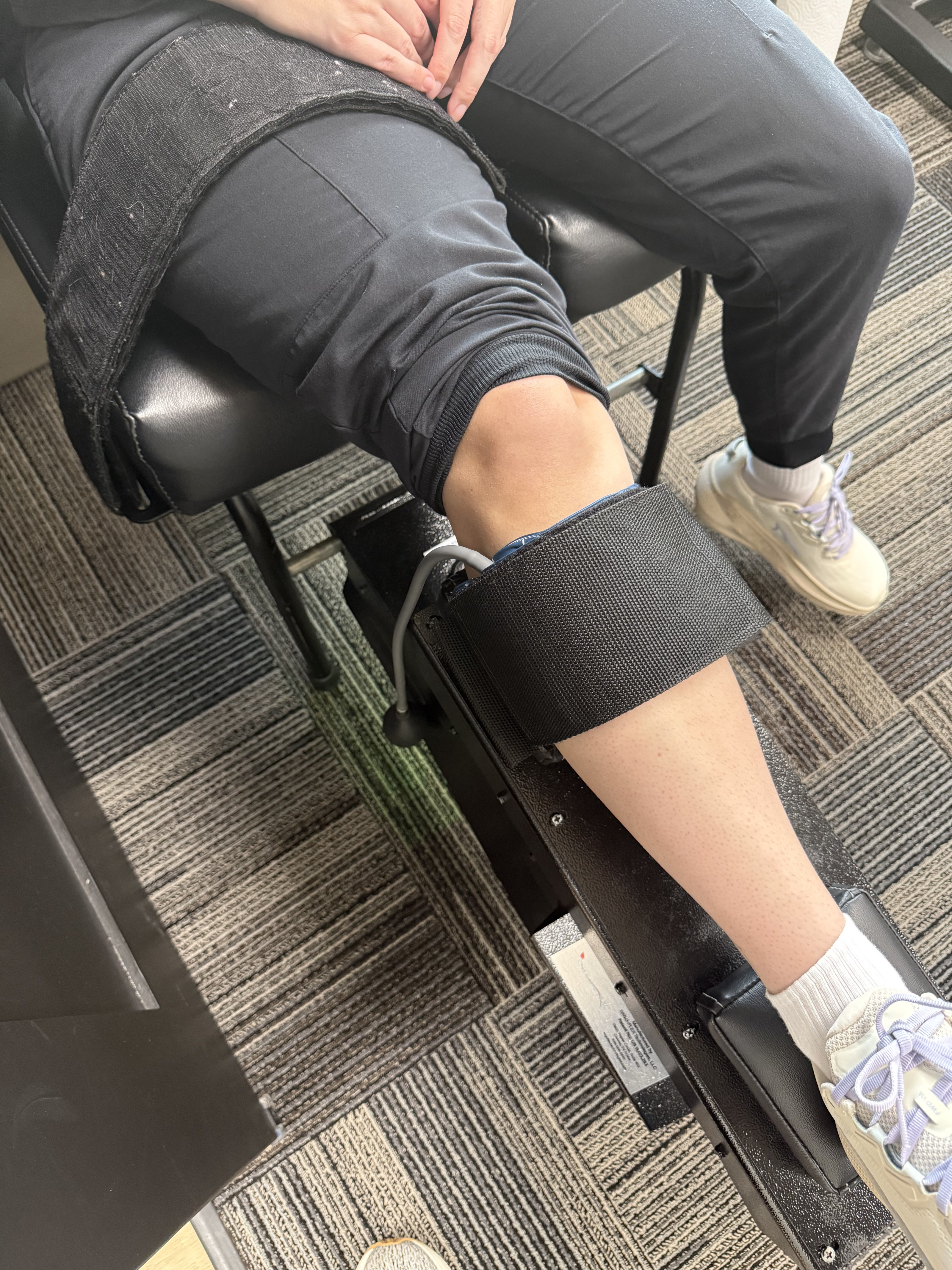
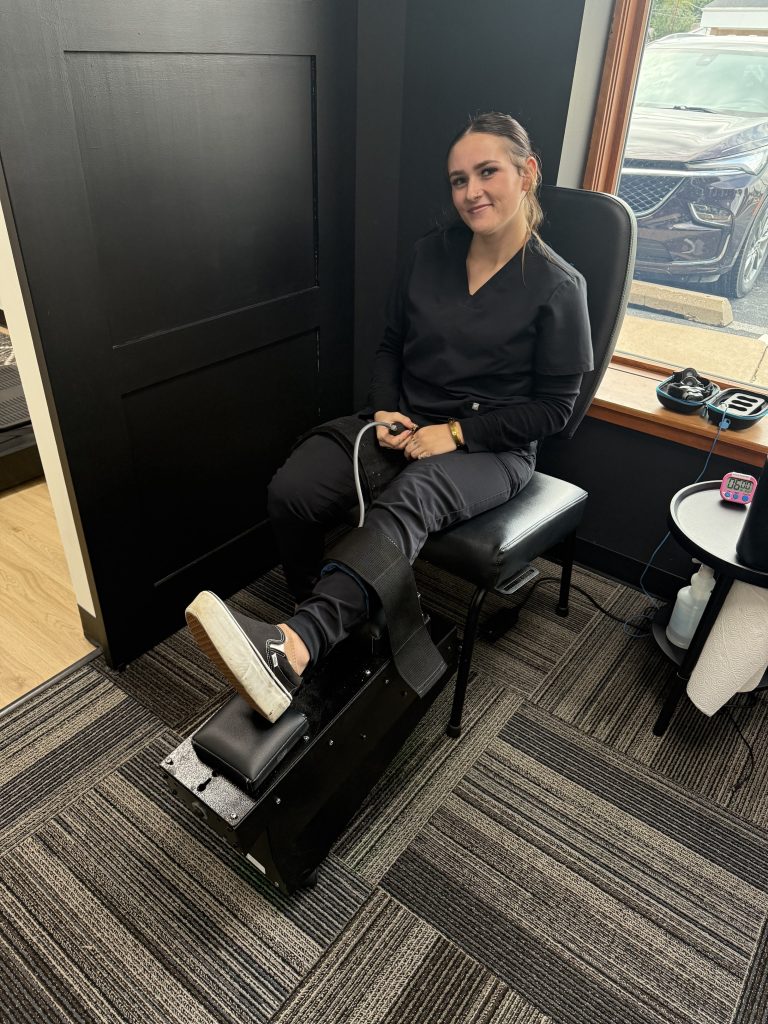
Knee decompression with Knee On Trac
Chronic knee pain is rarely one problem — so we treat it with more than one therapy. Knee On Trac is the mechanical foundation that makes every other modality in your plan work better.
Gentle, automated knee traction
Knee On Trac by Ergo-Flex Technologies gently opens the knee joint space in comfortable 5–10 minute sessions — helping flush inflammatory waste and draw in the nutrients cartilage needs to repair.
- Precise, adjustable traction — no manual pulling
- Padded, ergonomic knee cradle with lumbar support
- Quick sessions that fit inside a single visit
A patient-focused decompression plan
Research on multi-modal knee care shows combined protocols outperform any single therapy. That’s exactly how your RENEW protocol is built: traction opens the joint space first, so SoftWave, red light, and regenerative support reach the tissue that needs them.
One layer at a time is temporary relief. Layered together, it’s a plan.
What you may notice
Potential Benefits of Knee Decompression
Reduced joint discomfort
Controlled decompression may temporarily reduce pressure across the knee while the broader plan addresses movement, surrounding tissue, and recovery factors identified during the evaluation.
Improved mobility
The team tracks walking, bending, and everyday movement so decompression, mobility work, and supportive therapies can be adjusted around the activities that matter to you.
Better flexibility
Gentle traction and movement guidance may help a stiff knee move through a more comfortable range without forcing motion beyond your current tolerance.
Support for tissue health
When appropriate, the plan may combine decompression with SoftWave, red light, or medically reviewed regenerative options intended to support the local recovery environment.
A conservative option before considering invasive care
The evaluation clarifies whether a non-surgical plan is reasonable for your findings and when imaging, orthopedic review, or another level of care should come first.
More confidence with daily movement
Progress is connected to practical goals such as stairs, standing, walking, exercise, and getting up from a chair rather than a generic promise of improvement.
Personalized plan based on your evaluation
Dr. Sinan and the medical team select each part of care from your history, examination, safety screening, goals, and response instead of applying one protocol to every knee.
What to Expect With Knee Decompression
Knee decompression is a non-invasive treatment designed to gently reduce pressure on the knee joint and support more comfortable movement. Before treatment begins, we evaluate your symptoms, mobility, and joint function to determine whether knee decompression may be appropriate for your needs.
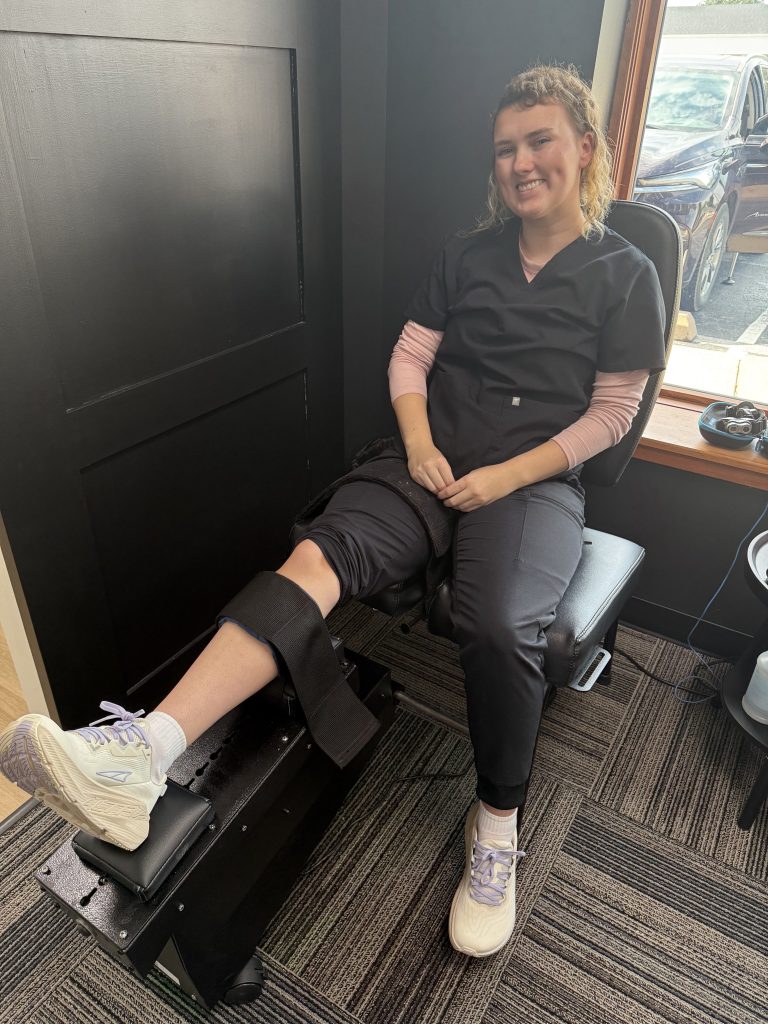
- Gentle, controlled decompression of the knee joint
- Non-invasive treatment with no injections or surgery
- Treatment customized to your comfort and mobility needs
- Progress monitored throughout your recommended care plan
Continue exploring
Care Options That May Complement Knee Decompression
Answers before you ask
Common Questions About Knee Decompression
Is knee decompression right for every knee problem?
No. The team evaluates mobility, symptoms, history, and available imaging before recommending decompression or another next step.
Is knee decompression surgical?
No. Knee Decompression Therapy is positioned as a non surgical option.
Who is a good candidate?
Patients with chronic joint pain, knee pain, stiffness, or mobility limitations may be candidates, but the team must evaluate each case individually.